 Mice and Chips
One Thursday with Marcus.
Every number faced.
The game is manic, you don't have to be.
Marcus plays $2/$5 no-limit hold'em and keeps an honest record. This is one day of his. The game around him is manic. He is not. The cards were never in his power. The record was.

I · Thursday, 8:23 AM
Is today a day to play?
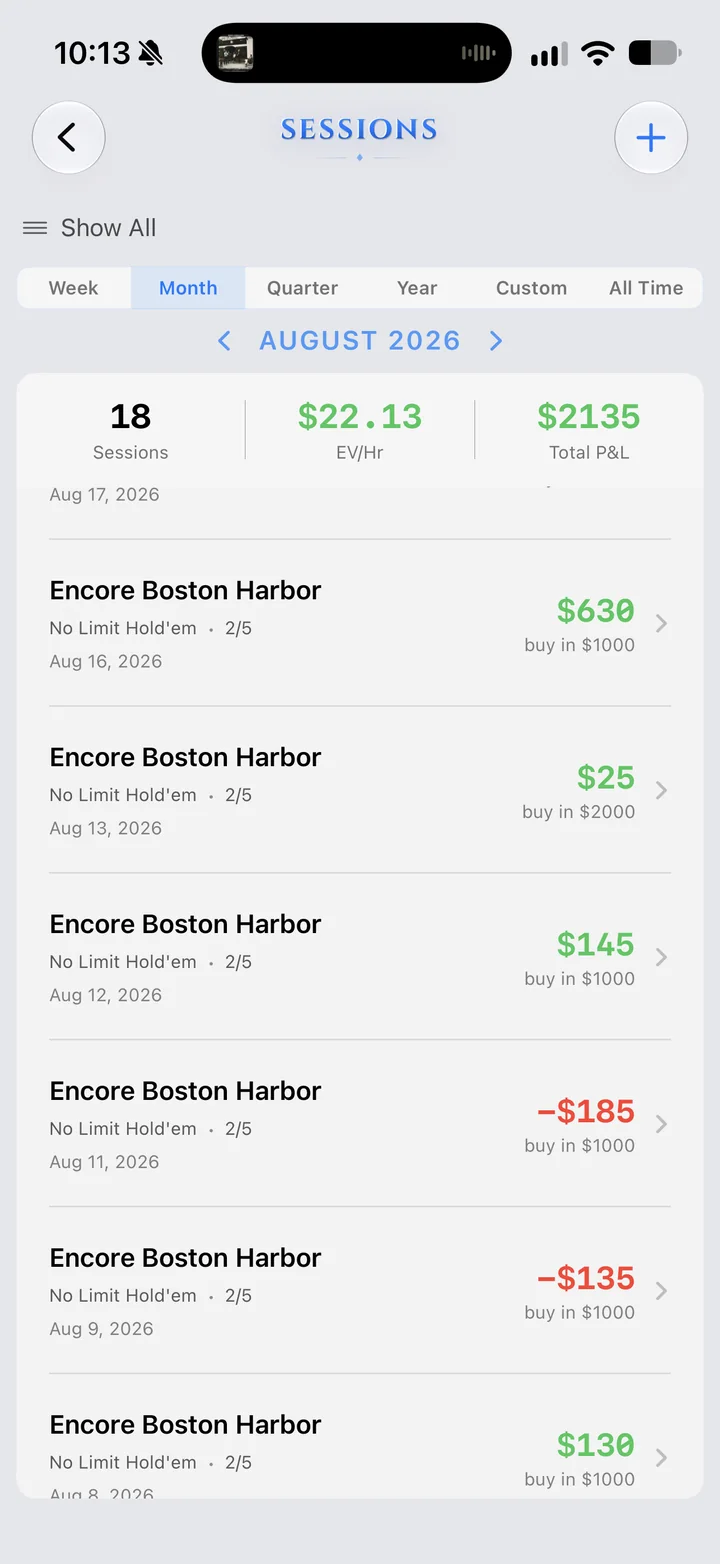
Marcus does not consult omens. He consults the heat map, where a year of his own play is laid out by day and by hour: green where he has won, red where he has not.
Thursday morning is the greenest square on the board. Friday evenings, he notes in passing, have paid him $131 an hour across six sessions.
The wise man does not ask the gods whether to play. He asks the record. The record says: go.
II · 8:24 AM
But can he afford to?
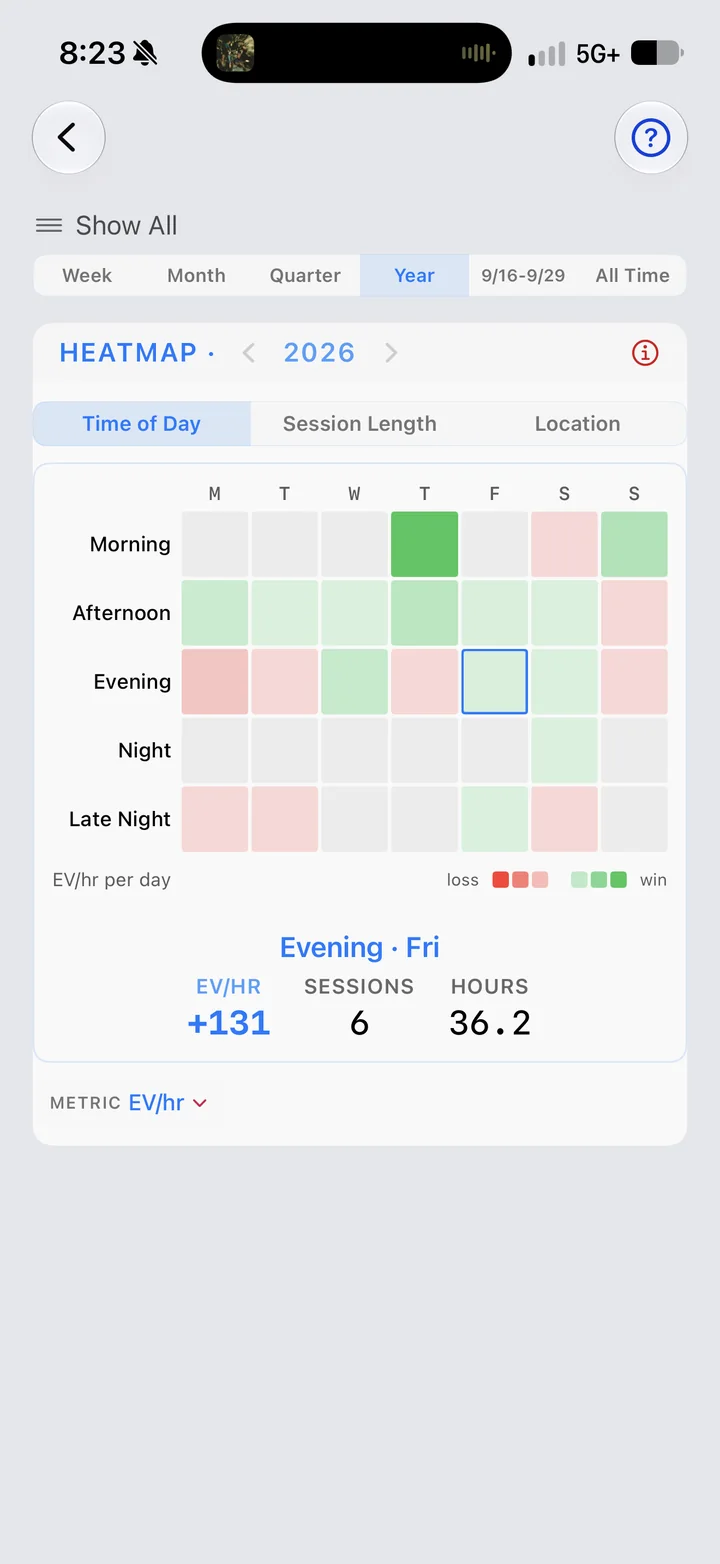
Desire is not a bankroll. Before he reaches for his keys, Marcus looks at what he actually has: $16,290, of which $6,500 is cash and $9,790 is chips.
He has deposited $17,000 and stands $710 behind. He does not look away from the $710. A man who cannot face a small number will not survive a large one.
The bankroll will bear a session. He may play.
III · 8:24 AM
He is ready. Let the session begin.
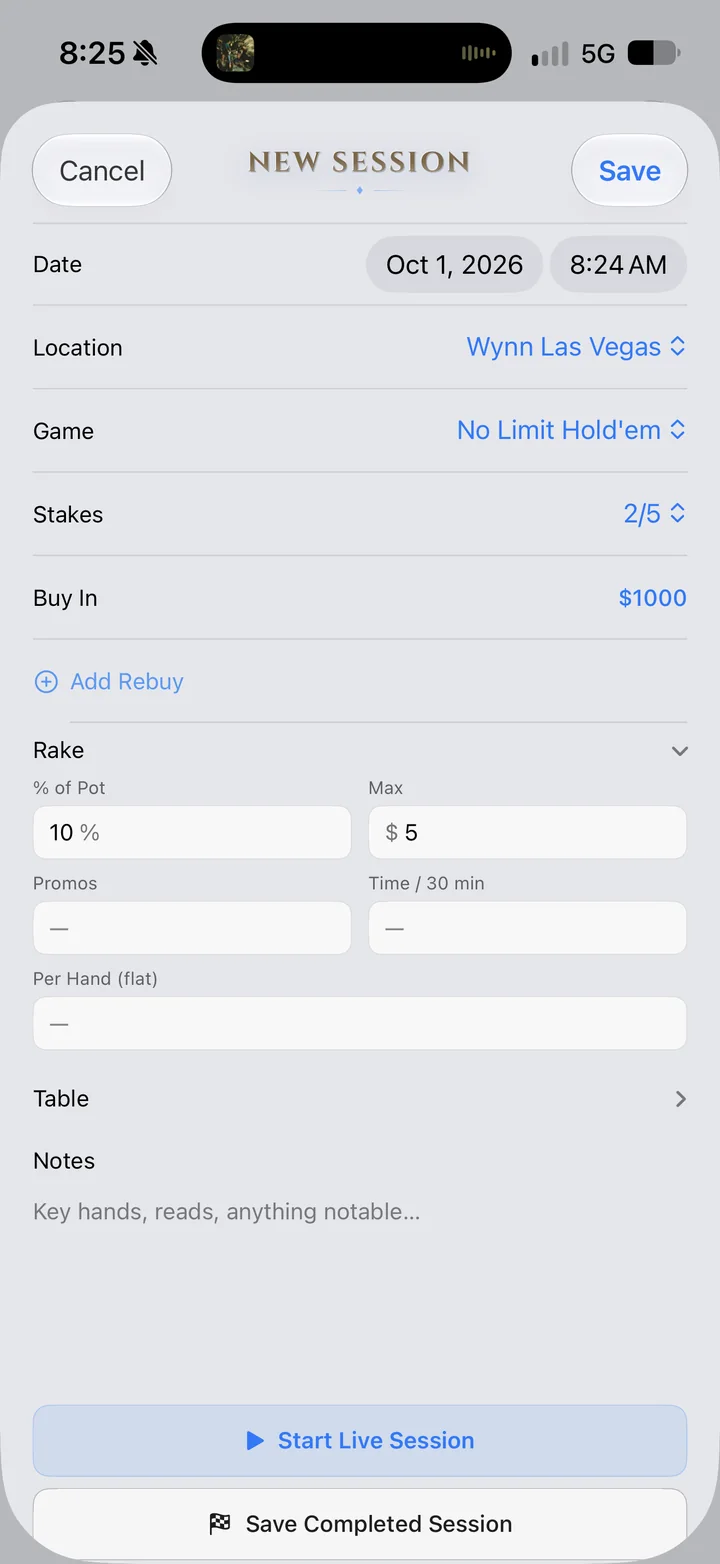
Wynn Las Vegas. No-limit hold'em, $2/$5. He sets down the location, the game, the stakes, and the rake: ten percent of the pot, to a five-dollar cap.
Then he touches Start Live Session.
What is in his power, he has now done. The rest belongs to the deck.
IV · 8:28 AM
Fortune, or skill?
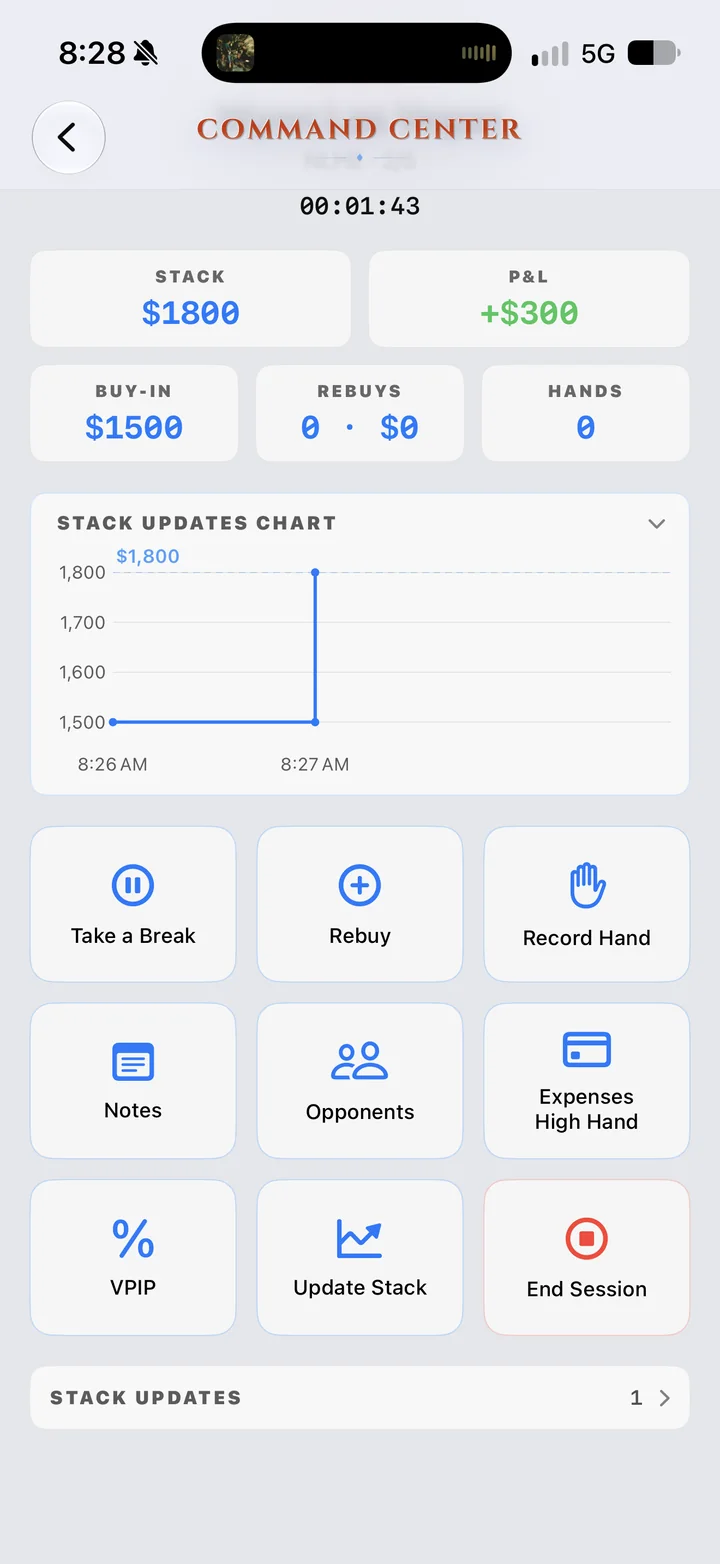
Less than two minutes in, Marcus is up $300. The Command Center reads stack $1,800, buy-in $1,500.
Was it luck, or was it skill? The table has opinions. The calm answer is that it does not matter yet. One pot is not evidence of anything.
He taps Update Stack, the chart steps upward, and he logs the win exactly as he would have logged a loss.
V · A hand worth keeping
He writes it down before memory improves it.
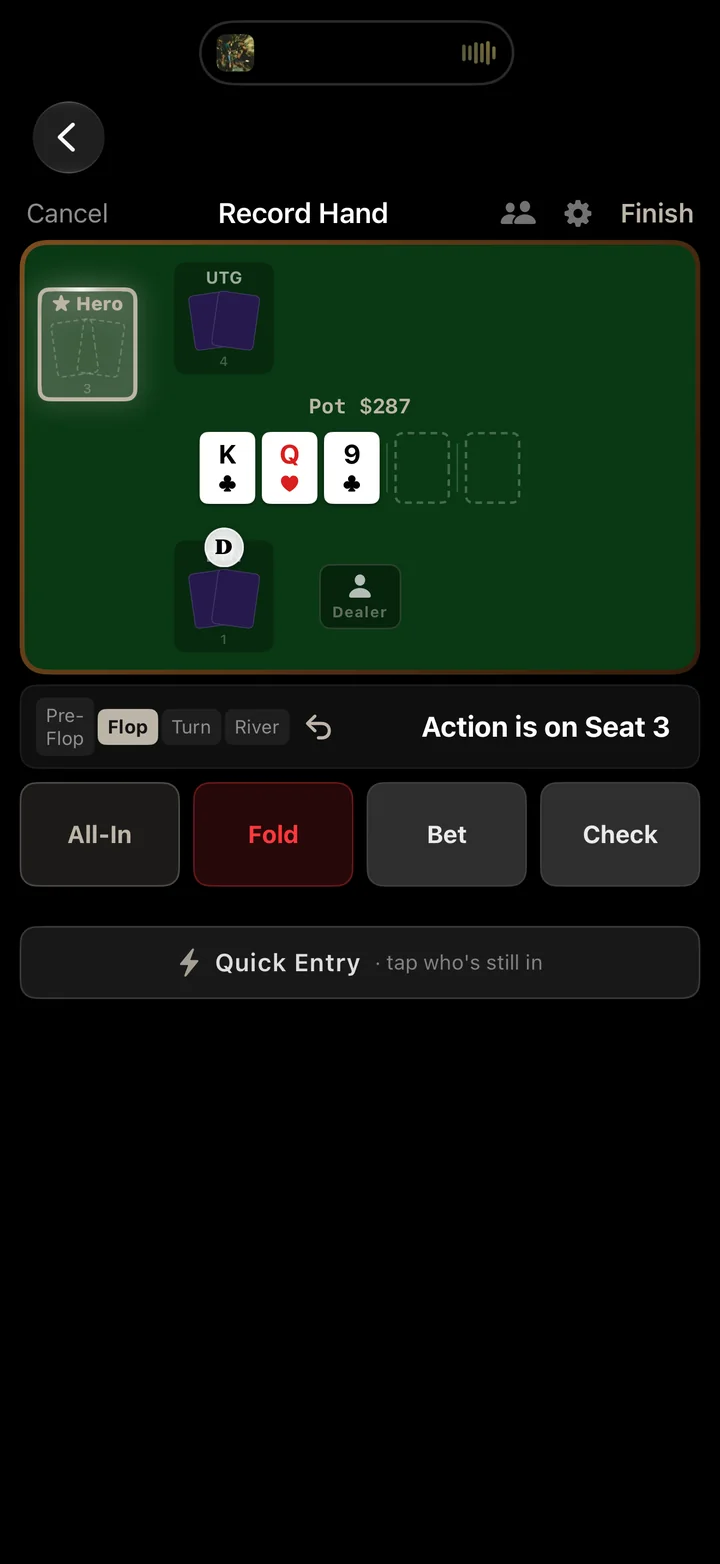
Then comes a hand he cannot settle at the table. King, queen, nine on the flop, two of them clubs. $287 in the pot, and the action is on him.
Memory is a flatterer; by evening it will have him playing the hand better than he did. So he records it as it happens: the seats, the cards, each bet, street by street.
Tonight he will review it. For now, he plays it.
VI · 8:31 AM
A hit and run. Then, a cooler head.
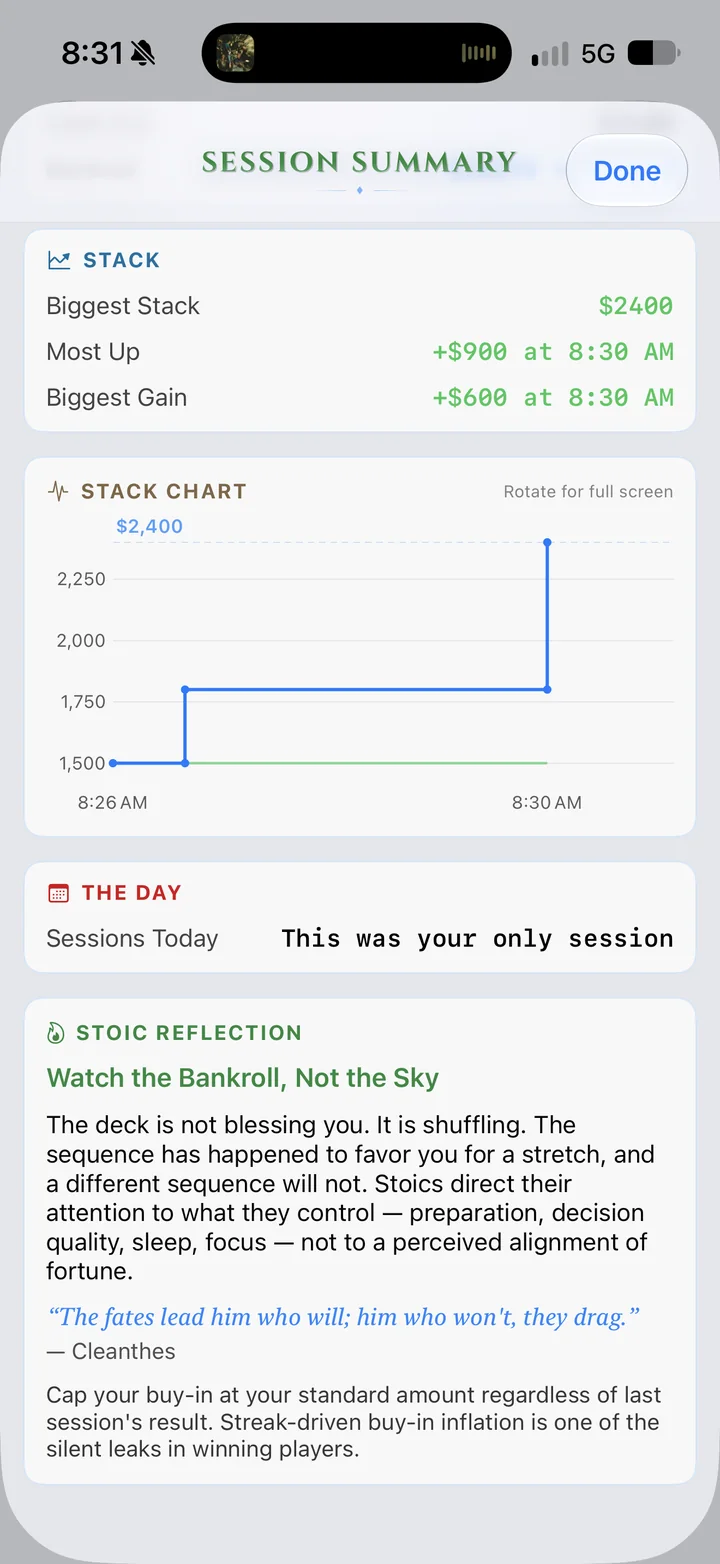
Four minutes after his first chip went in, Marcus stands up $900 ahead, his stack at $2,400. A hit and run.
The summary does not congratulate him. It offers a reflection instead, titled Watch the Bankroll, Not the Sky: "The deck is not blessing you. It is shuffling." And from Cleanthes: "The fates lead him who will; him who won't, they drag."
It advises him to buy in for his usual amount next time, whatever happened today. Marcus, who had been thinking of buying in for more, says nothing.
VII · That evening
How should he have played it?
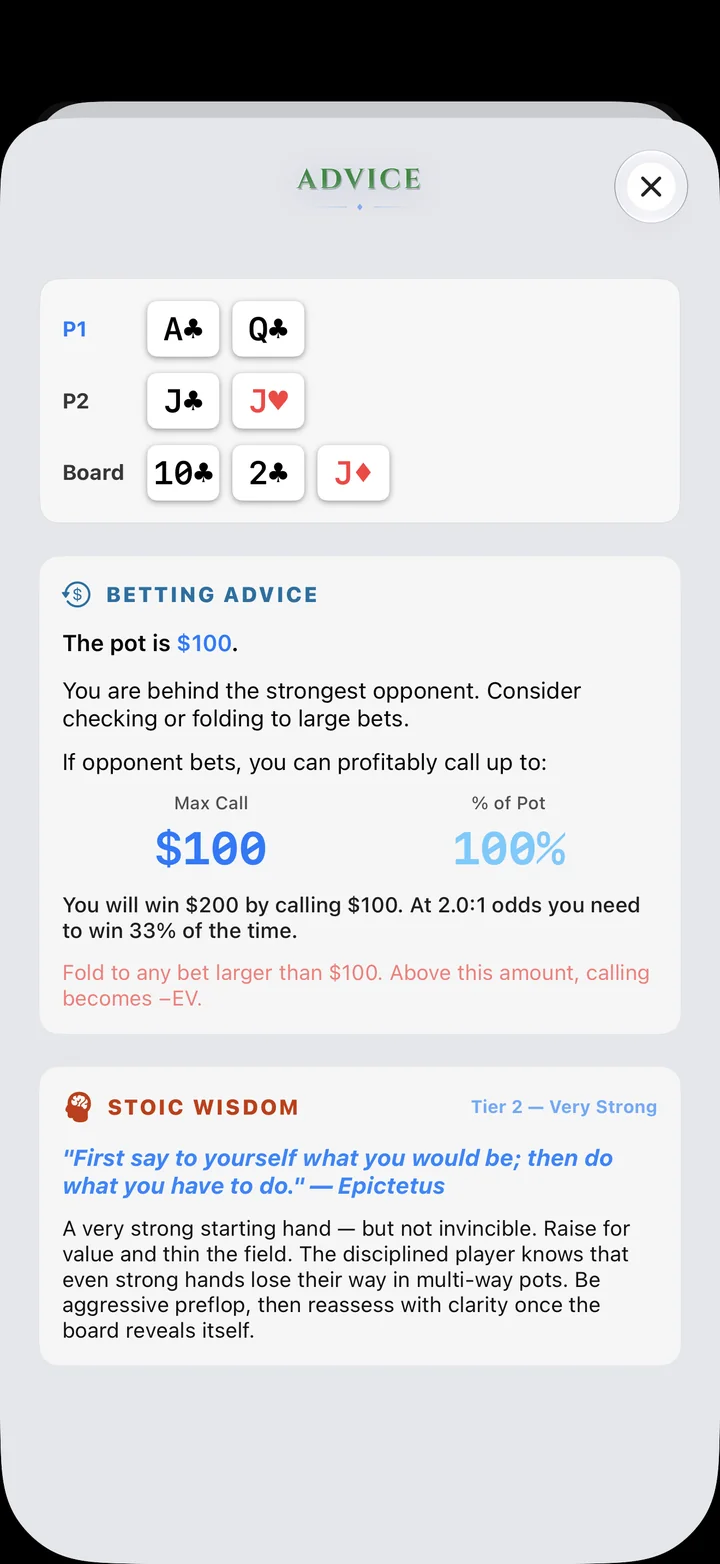
One hand still troubles him. Ace-queen of clubs against pocket jacks, on a board of ten, deuce, jack. He held a draw. His opponent held three jacks.
He asks for advice and receives it without flattery: he is behind. He may profitably call up to $100 into the $100 pot, and should fold to anything larger.
With the arithmetic comes Epictetus: "First say to yourself what you would be; then do what you have to do." Marcus would be a player who folds when the price is wrong.
VIII · Uh oh
His wife asks how much he has played this year.
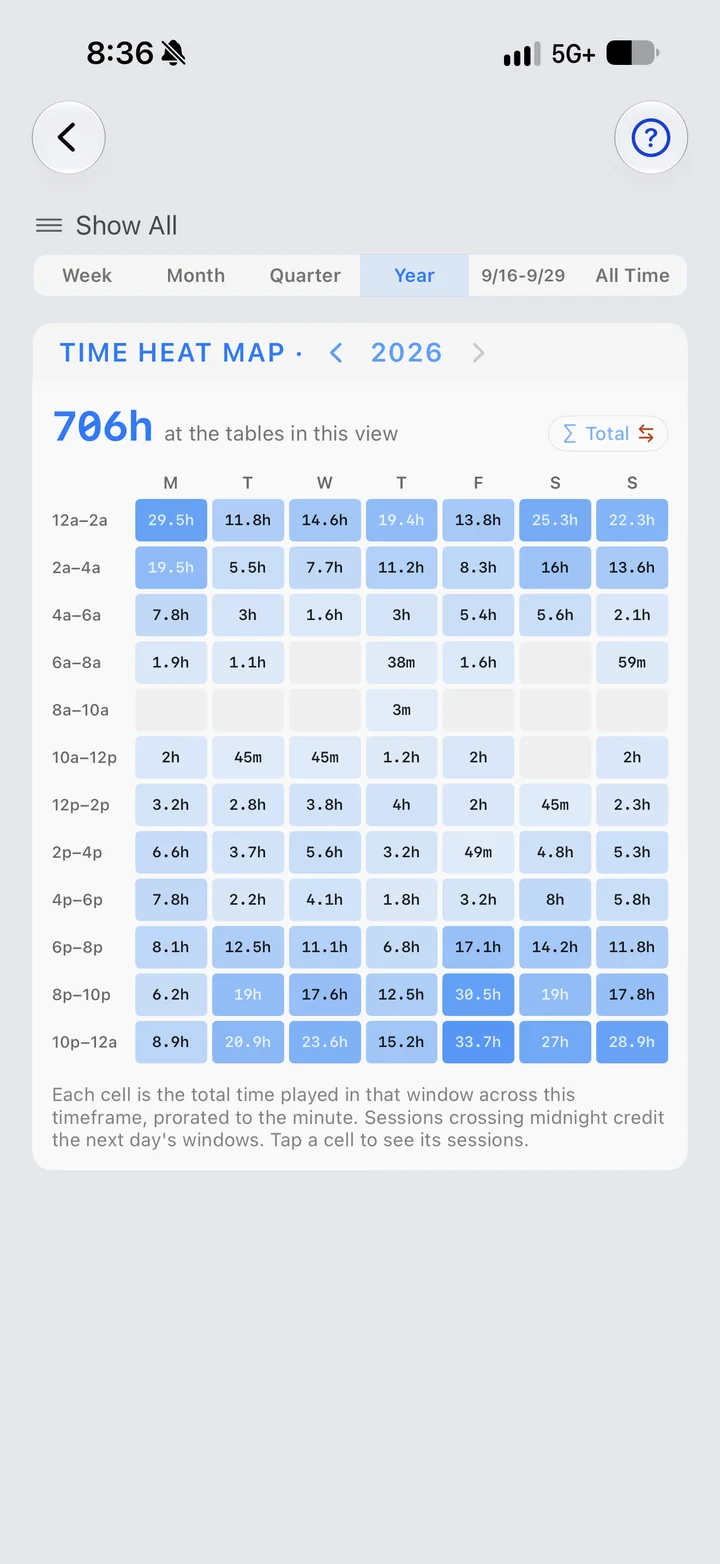
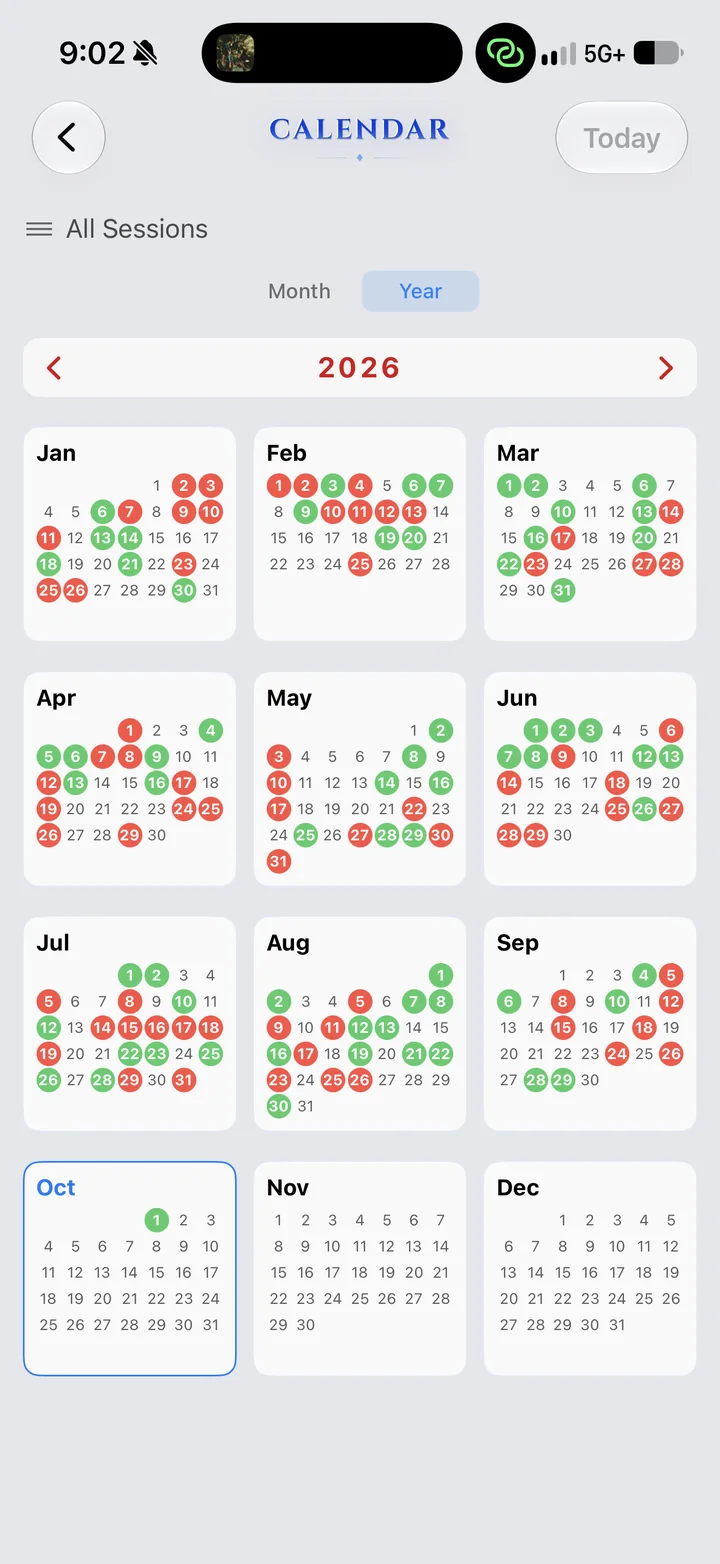
Marcus has faced all-in bets with a steadier pulse. But a calm man does not hide from a fair question, and fortunately the answer is already written down: 706 hours in 2026, laid out by day and by hour, and a calendar of every day he sat down. He turns the phone toward her and adds nothing. The map is thorough enough.
IX · The harder question
"But are you even winning?"
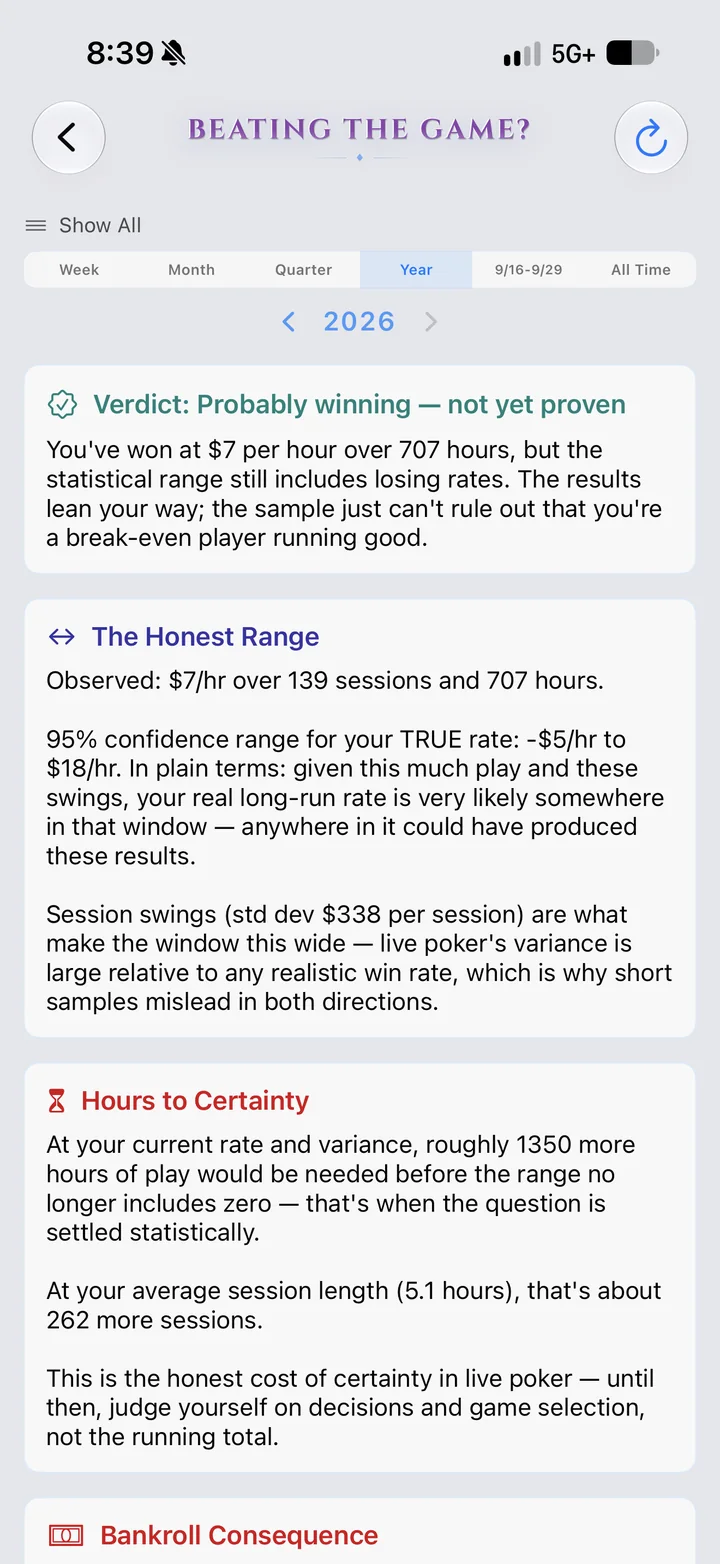
This is the question beneath the question. Marcus opens the report built for it and reads the verdict aloud: "Probably winning — not yet proven."
Seven dollars an hour over 139 sessions and 707 hours. The honest range runs from losing $5 an hour to winning $18, and roughly 1,350 more hours would settle the matter.
He pronounces the word "probably" with as much dignity as the word allows.
X · Evidence
He produces a witness.
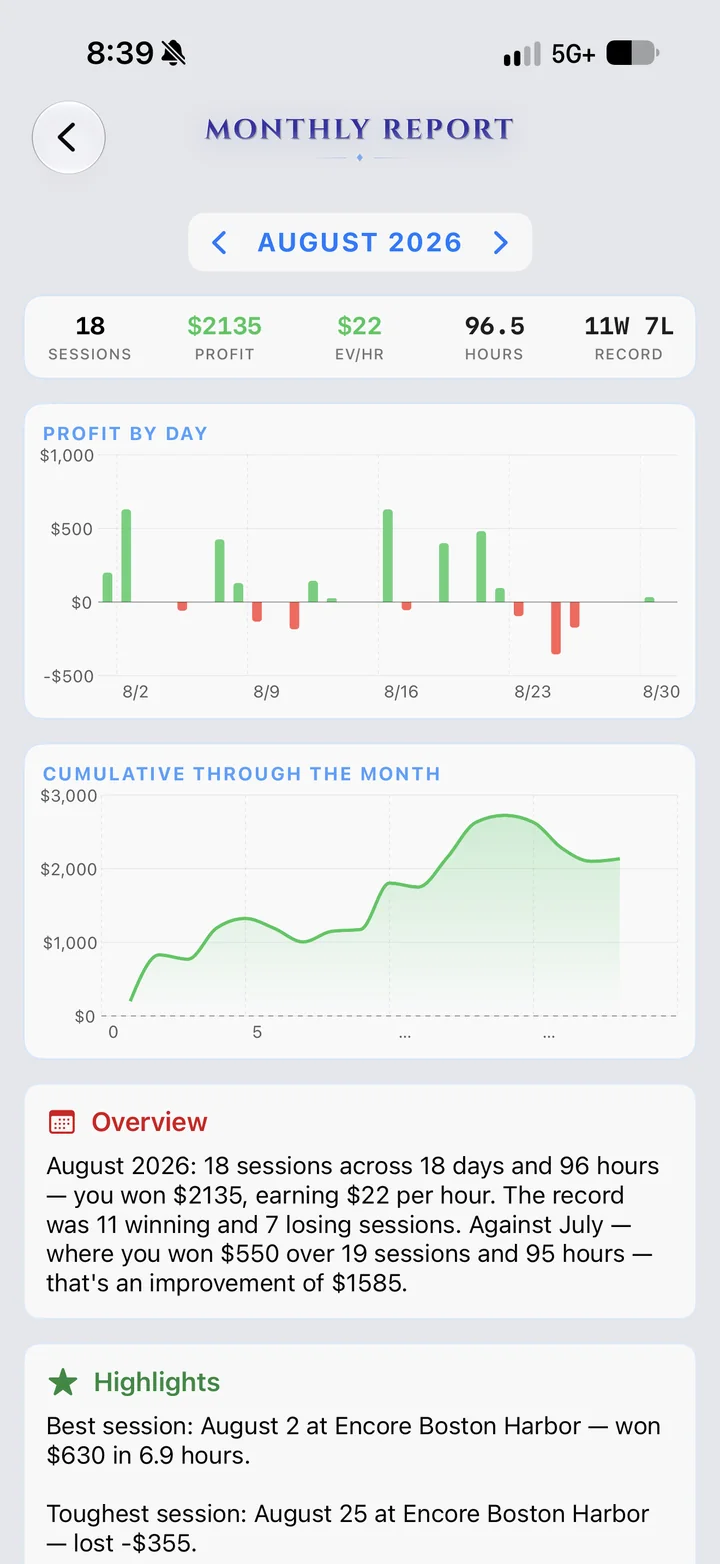
A claim wants proof, so he finds a month that makes his case. August: 18 sessions, 11 wins, 7 losses, $2,135 in profit, $22 an hour.
It is true that he chose the month. Even a philosopher is permitted to choose his example.
But the report is his, the numbers are real, and the line climbs most of the way through. She studies it longer than he expected.
XI · Cross-examination
She asks to see them one by one.
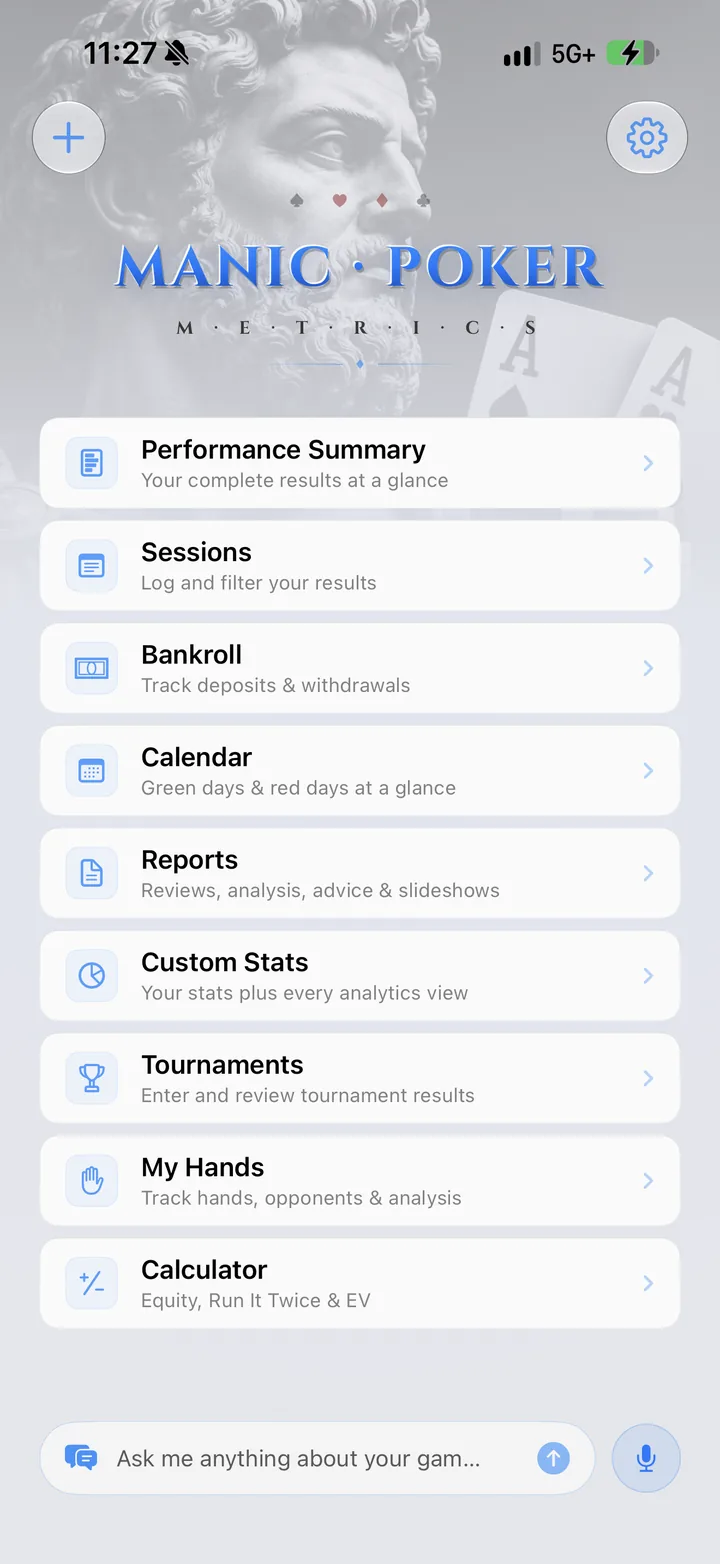
A summary can be made to say anything. So Marcus opens his sessions for August and lets her read down the list: eighteen sessions, $2,135 in all, $22.13 an hour.
There is a $630 night near the top, and he would happily linger there. But two rows below it sit a loss of $185 and a loss of $135, and he scrolls past them at the same speed as the wins.
Every session is there with its room, its game, its buy-in, and its result. He has hidden nothing, least of all from himself. That, he suspects, is what she was really asking.
XII · The rake
He does not like to speak of it. He looks anyway.
There is one screen Marcus does not enjoy. He opens it regardless, because whatever a man refuses to look at ends by governing him.
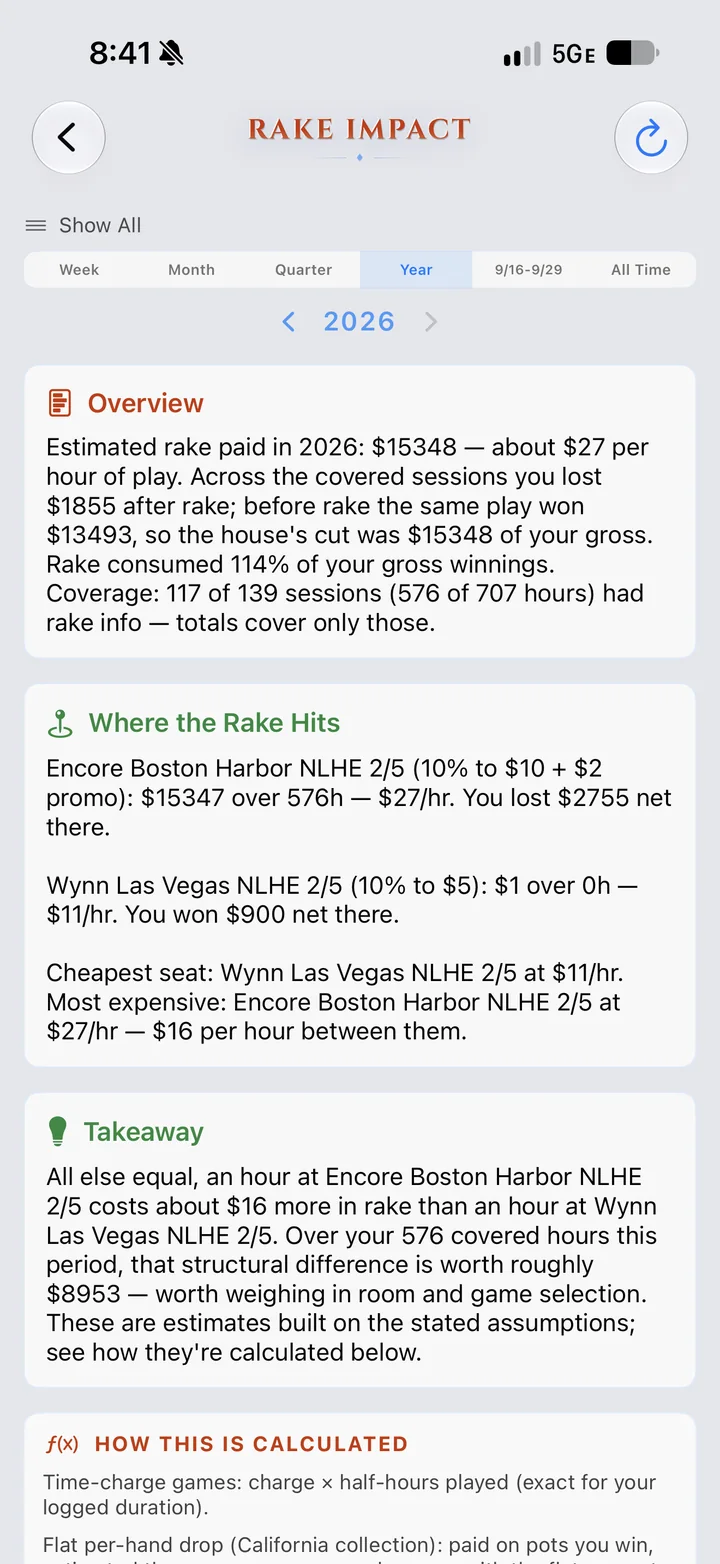
An estimated $15,348 in rake this year, about $27 for every hour he sat. Before the rake, his play earned $13,493. The house took more than that.
At his home room an hour costs him $27. At the Wynn, the same hour costs $11. The rake is not in his power. Where he sits is. He closes the app, and resolves to choose his seat as carefully as he plays his cards.
Bankroll
Deposits, withdrawals, and profit divided between cash games and tournaments — an account that always balances.
Bring your history
The past is not lost. Import sessions, rebuys, stack graphs, and tournaments from Poker Bankroll Tracker or any CSV.
Kept safe
A backup is made each day to your own iCloud. Find it in the Files app; restore it in two taps.
And No One Else Reads It
No accounts. No servers.
Nothing collected.
What is yours should remain yours. Everything Manic Poker Metrics knows is kept on your iPhone and in your personal iCloud. The AI runs on your device. We could not read your results if we wished to — and we do not wish to.